
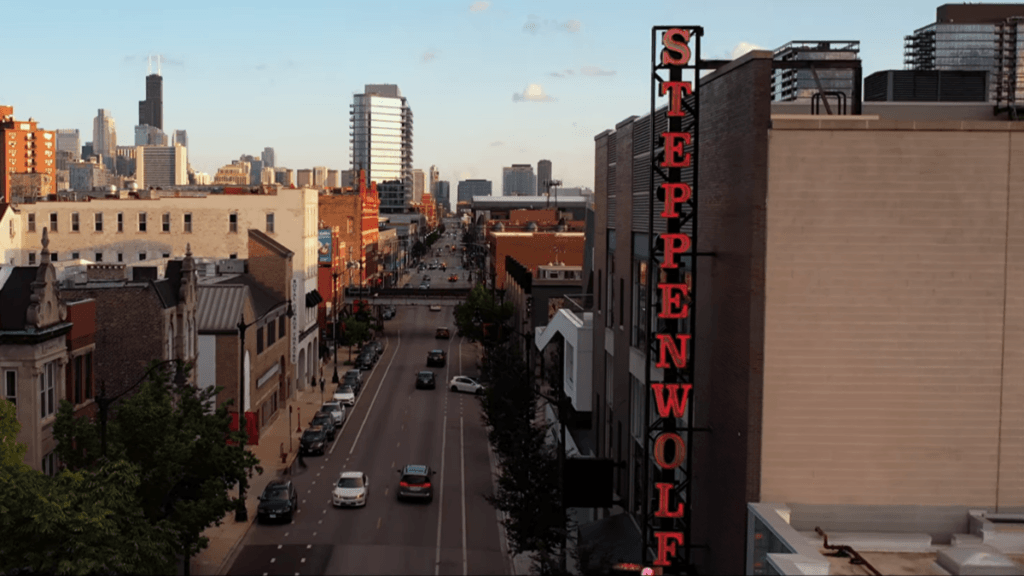
Steppenwolf made its name with forceful ensemble acting and contemporary plays. The company’s Lincoln Park campus has grown considerably since its early years, but the focus remains on the actors and the work onstage.
Steppenwolf Theatre: Key Details
| Detail | Information |
|---|---|
| Address | 1650 N. Halsted St., Chicago, IL 60614 |
| Neighborhood | Lincoln Park |
| Phone | (312) 335-1650 |
| Theaters | Downstairs Theater, Ensemble Theater and 1700 Theater |
| Public Transit | CTA Red Line (North/Clybourn); buses 8 and 72 |
| Parking | Garage at 1624 N. Halsted (no elevator). Accessible parking spaces are available in Steppenwolf’s lot at 1700 N. Halsted; the theater lists a standard $20 rate payable at Front Bar. Confirm details on its official accessibility page. |
| Accessibility | Wheelchair seating, assistive listening devices and select accessible performances |
| Website | steppenwolf.org |
| Tickets | Shows & Tickets |
Performance Spaces and Seating
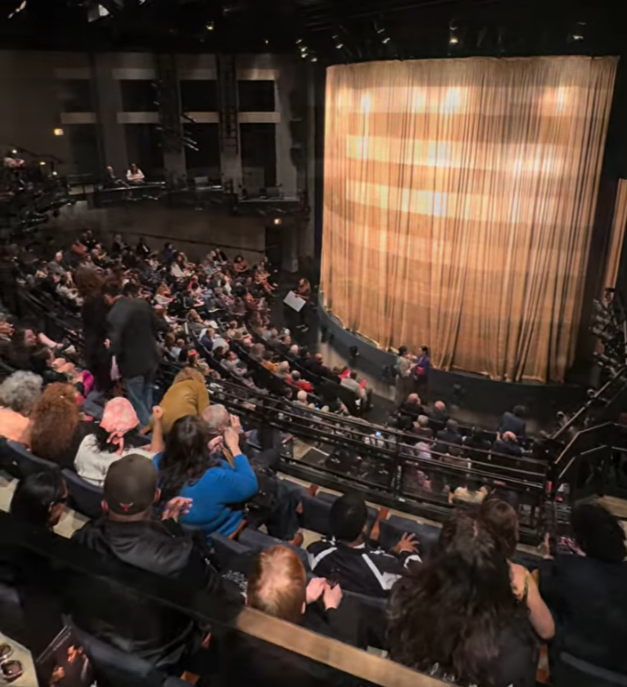
Steppenwolf has three performance spaces: the Downstairs Theater in its main building, the Ensemble Theater in the Arts and Education Center, and the smaller 1700 Theater. The Downstairs is a 515-seat proscenium theater; the 400-seat Ensemble is in the round, with no seat more than 20 feet from the stage; and the intimate 1700 Theater hosts smaller productions, music, spoken word and other performances. Seating arrangements vary, so check the specific production rather than relying on a general campus seating chart. For arrival, use the main entrance at 1650 N. Halsted St. for the Downstairs Theater, 1646 N. Halsted St. for the Ensemble Theater, and 1700 N. Halsted St. for the 1700 Theater. Check your ticket and Steppenwolf’s visitor directions in case an event uses a different entrance.
What to Know Before Visiting
Confirm the stage, start time and running time before you arrive. Seating, ticket policies and accessibility details depend on the performance space and can change. The official site is the best place for current practical information. For a broader look at professional companies, see our guide to Chicago Equity Theatre Companies.
Insider Tips for Visiting Steppenwolf Theatre
- Arrive early and check your entrance. Plan to arrive about 30 minutes before curtain. Use 1650 N. Halsted for the Downstairs Theater, 1646 N. Halsted for the Ensemble Theater and 1700 N. Halsted for the 1700 Theater. Late seating may be delayed until a suitable break.
- Choose transit or parking with access in mind. The North/Clybourn Red Line stop is south of the campus. The garage at 1624 N. Halsted has no elevator; accessible spaces are available in the 1700 N. Halsted lot. See Steppenwolf’s accessibility details.
- Check discounted tickets early. Limited-price and rush offers may be available, but selection varies by show. Our Chicago theater ticket guide covers other options.
- Visit Front Bar before the show. Front Bar at 1700 N. Halsted serves drinks and food and is a convenient place to meet before a performance. The 1700 Theater is tucked behind it.
- Check the seating layout for your show. The Downstairs, in-the-round Ensemble and intimate 1700 Theater offer very different experiences. If you need step-free seating or assistive listening, arrange it before purchasing tickets.
- Leave time to explore the campus. Steppenwolf has several lobby and bar spaces. If your production has an intermission, check whether drinks can be ordered ahead.
Steppenwolf Theatre History
Steppenwolf began in 1974 with Gary Sinise, Terry Kinney and Jeff Perry in Highland Park. The company later staged its 1976 season in a former school basement there. Its early productions were built around a close-knit group of performers who knew one another’s strengths and could take risks together. That ensemble approach mattered: instead of assembling an entirely new cast for each play, the company developed lasting artistic relationships. Productions became known for emotionally direct, sometimes confrontational acting, and Steppenwolf helped establish Chicago as a center for serious contemporary theater. The company’s history is also part of a larger local tradition; see our guide to plays set in Chicago.
Over time, Steppenwolf moved to Lincoln Park and expanded its campus, most recently adding the Arts and Education Center and its Ensemble Theater. Alumni have gone on to major film and television careers, but the company’s importance is not simply a list of famous names. Its lasting contribution is the idea that a resident ensemble can shape a theater’s voice across many productions and seasons. Steppenwolf received the Regional Theatre Tony Award in 1985. For more on local honors, see our Jeff Awards guide.
Steppenwolf’s Ensemble Tradition in ChicagoCritic’s Reviews
Steppenwolf’s reputation for ensemble acting isn’t simply part of its history. It comes through repeatedly in ChicagoCritic’s coverage of the company’s productions.
In American Buffalo, Tom Williams praised the cast’s ability to find both dark humor and emotional weight in David Mamet’s dialogue. The performances illustrated the demanding, character-driven drama closely associated with Steppenwolf.
Jacob Davis made a similar observation about Airline Highway, describing how its large ensemble created a convincing community through overlapping dialogue and sharply defined characters. The strength of the production came in large part from the interactions between performers.
Davis also praised the ensemble work in Mary Page Marlowe, Tracy Letts’s play about a woman’s life told across different periods. The production showed how Steppenwolf’s acting tradition can support new writing and unconventional storytelling.
These reviews help explain the company’s identity. Its most memorable work often grows out of the relationships between actors, the tension within a scene and the complexity of the characters. Steppenwolf can stage ambitious productions, but the ensemble remains central to its approach.
Steppenwolf Productions in the ChicagoCritic Archive
ChicagoCritic’s historical reviews of Steppenwolf productions include:
- George Orwell’s 1984 — a stage adaptation of the classic dystopian novel.
- Marie Antoinette — a contemporary take on the French queen.
- Lord of the Flies — an adaptation of William Golding’s novel.
- Who’s Afraid of Virginia Woolf? — Edward Albee’s classic domestic drama.
- To Kill a Mockingbird — a stage version of Harper Lee’s novel.
- Of Mice and Men — John Steinbeck’s story of friendship and hardship.
These articles document past productions; they do not indicate what is currently playing.
Steppenwolf Theatre FAQs
Is Steppenwolf in downtown Chicago?
No. Its campus is in the Lincoln Park neighborhood, north of the Loop.
Does Steppenwolf present musicals?
Steppenwolf is best known for plays and actor-centered dramatic productions. Programming can vary by season.
Where can I find current Steppenwolf productions?
Visit the official Steppenwolf Theatre Company website for schedules, tickets and visitor information. For a citywide look at what’s on stage, see Chicago Shows Now Playing.
See ChicagoCritic’s Chicago Theaters Guide for other notable venues. For practical visitor advice, see our theater dress-code guide.