Savage in Limbo

thepoortheatre
Savage in Limbo

By John Patrick Shanley

Directed by Will Crouse

Produced by The Poor Theatre

Playing at Rivendell Theatre

“Hunger!”

A Play for the Lonely Savage in Us All

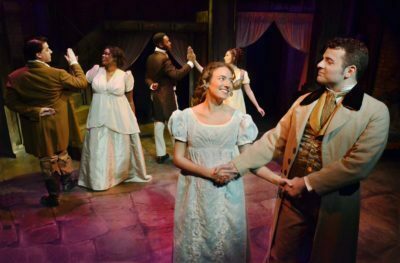
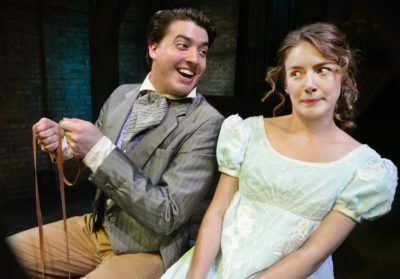
The Poor Theatre opened its 4th season this week with a strong production of John Patrick Shanley’s 1984 play Savage in Limbo. Though Shanley didn’t subtitle this play, as he did his 2004 drama Doubt: A Parable, its existential portrayal of five lives caught in the seething pool of mid-life desperation certainly offers a parabolic, life-in-aspic examination of the hungering misery that befalls those who lack the courage either to dare vice or to sustain virtue.

limbo10

It’s only 7:30pm in this misty, Bronx bar when Denise Savage (Abbey Smith) bursts in, brimming with energy and desperate for some thrills. But the jukebox is broken and the bar is virtually empty. That is, except for the presence of Denise’s former classmate, April White (Philena Gilmer), who is herself already heartily stoned into a stupor; and, of course, there is the taciturn barkeep Murk (Dan Toot), who caringly and continually extends April credit in order to help keep her in her oblivious daze.

As Denise settles down for a game of solitaire, in rushes Linda Rotunda (Erika Haaland), another former classmate of Denise, with tears in her eyes. Linda’s boyfriend Antonio Brunetti (Tony Aroncia), we learn, has just told her he wishes to see other women — other, ugly women, to be precise. Not long after this discovery, and after the three women have nearly agreed to move in together to begin their new lives, Antonio himself shows up and expounds upon his newfound, philosophical insight: ugly women, he has it, represent a class of women alien to him that holds the possibility of showing him a new perspective on life, one his wanton fornicating has never revealed.

limbo11

As one might expect, neither Denise nor Linda are exactly impressed or convinced, and the remainder of the evening plays out with each of them attempting to lure the Italian stud into her arms: Denise, a self-avowed virgin, promises the exotic existence of a “bed-less” home (i.e. no sex); Linda, on the other hand, a women with three illegitimate children (one of them his), promises a life of marriage. Like in Sartre’s No Exit, each of them have a need that only an other can satisfy; unlike No Exit, all of them can find some semblance of solace — except one.

The comparison with Sartre I think is appropriate, particularly because Will Crouse’s staging highlights well the existential nature of Savage in Limbo: the set (designed by Gregory Pinsoneault) is rather surreal, what with the constant fog lingering over the bar and the floor seeming to ride up the wall and hang from the ceiling. Crouse also has his actors break the fourth wall at times, either to sit in the audience or to address us directly, as if pleading to us for aid. I don’t know whether that is in Shanley’s stage directions, but it was an interesting touch, even though I wouldn’t say it added anything to my experience.

Aside from his quasi-metaphysical staging, Crouse directs some wonderfully honest performances from his actors — something, I’m learning, that should be cherished for its rarity. Erika Haaland (Linda) has to perform a lot of active listening in this 80-minute piece, and I declare unironically that her attentive reception to her scene partners alone is enough to make her a fascinating actress to watch. Tony Brunetti (Antonio) does well to make his character both irresistibly captivating as well as sympathetically obtuse, whereas a lesser actor might have played him too abrasively macho. And Abbey Smith, as the titular protagonist Denise Savage, brings a lot of energy to her character’s deep and embittered desperation; although, regrettably, her existential hunger is the least sympathetic despite (or, perhaps, on account of) it being the least subtextual and the most . . . well, savage.

Read more

The Ben Hecht Show

Written and performed by James Shermanhecht_ad_v2

Based on the books A Guide For the Bedevilled and

A Child Of the Century by Ben Hecht

Directed by Dennis Zacek

Produced by Grippo Stage Company

At Piven Theatre, Evanston

Riveting, thoughtful glimpse into the life and values of a major 20th Century writer

I’m a fan of one person shows. The skill it takes to present a solo show is daunting, yet playwright turned actor James Sherman has produced a worthy portrait of a near-forgotten literary figure from the 20th Century. Sherman has researched and complied the words of the prolific journalist, playwright, novelist, essayist, and screenwriter  – Ben Hecht (1894 -1964). Sherman is favorite Chicago playwright know as “the Neil Simon of Lincoln Avenue” for his  comic kitchen-sink  plays (See https://www.jamessherman.com/)

hecht11

Hecht was a major literary artist in the first half of the 20th Century. To appreciate this show more, be sure to read Hecht’s bio at https://en.wikipedia.org/wiki/Ben_Hecht. You’ll discover he was an American screenwriter, director, producer, playwright, journalist, and novelist. A journalist in his youth, he went on to write thirty-five books and some of the most entertaining screenplays and plays in America. He received screen credits, alone or in collaboration, for the stories or screenplays of some seventy films. He became an active Zionist shortly before the Holocaust began in Germany, and wrote articles and plays about the plight of European Jews, such as, We Will Never Die in 1943 and A Flag is Born in 1946.

We probably remember the terrific TimeLine Theatre’s production of Hecht’s The Front Page a few years back.

What James Sherman deftly did on stage was to humanize Hecht as an honest person telling his life story from his Jewish origins that moved him from a person who  claimed that he had never experienced anti-Semitism in his life and claimed to have had little to do with Judaism, but, “was drawn back to the Lower East Side roots late in life and lived for a while on Henry Street, where he could absorb the energy and social consciousness of the ghetto,” wrote author Sanford Sternlicht.

Ben_Hecht_Billboard
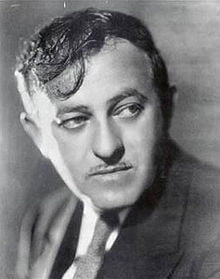
Ben Hecht

What Sherman accomplished so effectively was to take us on Hecht’s journey from a journalist to a playwright to a screenwriter (whose success made him as much as $100,000 in a month!) to a leader advocate for saving Jews in Europe during World War II and, eventually a homeland for the Jews.  The story is presented matter-of-factually by Sherman with nice humor and tads of irony.  I was amazed by the skill Sherman demonstrated on stage after many years of absence. I also learned much about  how the Jews of Hollywood made sure that none of Jewish life entered into mainstream films. We see how, despite the large paychecks, Hecht thought most of his film scripts contained little art.

The Ben Hecht Show is filled with fine examples of Hecht’s brilliant writing that was expertly delivered by James Sherman. This is an important solo show that contains  the wit, wisdom, and commitment of a major public figure to a worthy cause. Hecht’s story is in good hands with Sherman.

Read more

The Marvin Gaye Story

Rashawn Thompson as Marvin Gaye. Photos by Danny Nicholas.

Written by Jackie Taylor

Directed by Daryl D. Brooks

Musical Direction by Robert Reddrick

Produced by Black Ensemble Theater, Chicago

Black Ensemble True to Form While Examining Hate

As Black Ensemble reprises its greatest hits this year, it also gives each of its company members a chance to revisit their major roles. This summer, company regular Rashawn Thompson is reprising his role as Marvin Gaye in one of the earliest biographical revues Black Ensemble did in their Ravenswood theatre.

Read more

Thaddeus and Slocum: A Vaudeville Adventure

By Kevin Douglas

Directed by J. Nichole Brooks and Krissy Vanderwarker

Produced by Lookingglass Theatre Company

The Charm and Problems of Vaudeville Revisited

Representation of minorities is one of the most-discussed issues among actors and theatre artists today. Besides that actors of color complain of seldom finding interesting characters with significant stage/screen time to play, offensive practices and stereotypes which Chicagoans may have thought died out decades ago still exist and come up with surprising frequency. Thaddeus and Slocum: A Vaudeville Adventure’s writer, Kevin Douglas, and directors, J. Nicole Brooks and Krissy Vanderwarker, are believers in the Ghanian concept of sankofa, the idea that people have to return to the past to move forward. In a world-premiere drama featuring a plethora of signature Lookingglass acrobatics and early twentieth century vaudeville acts, Douglas and the cast explore the psychological impact of blackface on the white and black performers who used it, the politics of access, and the way racial disparity can taint even the closest relationships.

Read more

Hauptmann

By John Logan

Directed by Terry McCabe

Produced by City Lit Theater, Chicago

Hauptmann’s Case Still Fascinating

Before he wrote the Tony Award-winning Red and the screenplays of The Aviator, The Last Samurai, and Gladiator, John Logan was fascinated by courtroom dramas. His early play Never the Sinner, about Nathan Leopold and Richard Loeb, played in Victory Gardens last year, and now, City Lit Theater is reviving Hauptmann for that play’s thirtieth anniversary. Artistic director Terry McCabe, who also directed Hauptmann’s world premiere at Stormfield Theatre, and has directed it several times since, including at Victory Gardens, calls it his favorite play.

Read more

The Cure

Directed by Kendra Miller

Movement Direction by Thom Pasculli

Created by Walkabout Theater Company

Produced in Association with DCASE

Old Library Makes Existential Struggle a Spectacle

If you’ve ever seen The Seagull, and wondered what Konstantin’s decadent dramatic experiment on the subject of matter and energy would look like as a complete production, Walkabout’s The Cure may be about as close as you’re going to get. Part promenade and part performance art, this meditation on death, medicine, and spirituality, with a commissioned text by Emma Stanton, is a dizzying display of symbols and archetypes whose meaning is highly subjective. But though the work is confusing and often frustrating, it is an interesting use of the Chicago Cultural Center’s strange architecture, and contains athletic, daring choreography by Thom Pasculli.

Read more

The Sound of Music 2016 National Tour

Music by Richard Rodgerssom13

Lyrics by Oscar Hammerstein II

Book by Howard Lindsay and Russell Crouse

Directed by Jack O’ Brien

Musical Direction by Andy Einhorn

Choreography by Danny Mefford

Produced by Broadway In Chicago

At The Palace Theatre, Chicago

Wonderful young spirited actress leads sweet production of iconic musical

One of the all-time great musicals, The Sound of Music, contains one of the finest musical scores and is the ultimate “feel-good” Broadway musical. Director Jack O’Brien has mounted a fine Equity National Tour production filled with talented performers, including a darling group of children.

sound19

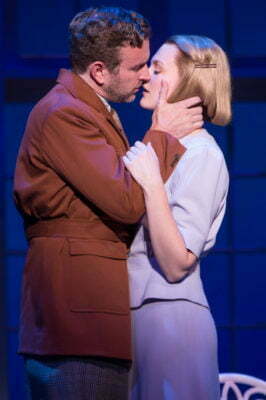
The Sound of Music is set in Austria in 1938 and is the story of Maria (Kerstin Anderson), a loving novitiate who is sent to be the governess to the seven van Trapp children. She teaches the kids to sing and wins their hearts with her unconditionally loving spirit and energy. Maria also falls for the Captain (Ben Davis). The family is forced to flee the Nazis before the Captain is forced to join the German navy. Based on a true story, The Sound of Music is a charming, heartwarming musical treat containing some of the best known show tunes and filled with enough goodness and purity to entertain all ages.

Kerstin Anderson is a wonderful Maria, as she is instantly likable with an innocence and bubbling energy and an outstanding voice. Ben Davis is commanding as the stern naval Captain. Terry Hansen and Merwin Foard effectively land “How Can Love Survive” and “No Way To Stop It.” Melody Betts’s stirring “Climb Ev’ry Mountain” soared.

som12

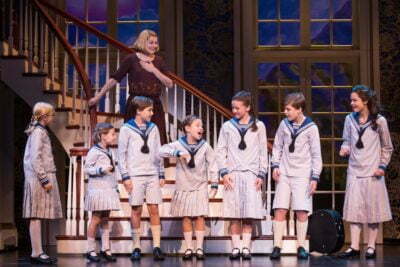
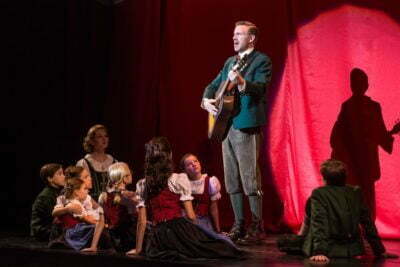
The seven children were marvelous. Paige Silvester as Lisel and Dan  Tracy as Rolf  sang nicely, danced, and flirted in “Sixteen Going on Seventeen.” The children were charming, well rehearsed and landed their songs and movements with precision. The “Do-Re-Me” song, led my Anderson’s Maria was special. These kids were so lovable.

The Sound of Music is so sweet, so pure that it can’t help but please. This is solid family entertainment. This National Tour is charming and well executed; it is a star-making role for Kerstin Anderson, still a college student. She anchors a wonderful production. Hurry, you only have through Sunday, June 12.

Read more

Northanger Abbey The Musical

Based on the novel by Jane AustenNorthanger_Abbey_01

Book by Robert Kauzlaric

Music and Lyrics by George Howe

Directed by Elise Kauzlarik

Jane Austen is Alive and Thriving in Roger’s Park

“I’d rather be reading Jane Austen,” my bumper sticker proclaims. Now, after seeing the opening night of Lifeline’s brilliant world premiere musical adaptation of Northanger Abbey, I need a matching sticker: “I’d rather be seeing Jane Austen.”

A master of the  “show don’t tell” school of writers, Austen is a perfect novelist for adapter  Robert Kauzlaric as, right from the opening scene, he dramatizes the heroine’s thoughts as well as her actions.

We are in a gloomy, high-ceilinged room with arched windows which reveal flashes of lightning to accompany crashing thunder. A gossamer-clad damsel, surrounded by mysterious masked figures and clutching a book, is obviously in distress. Are we in the right play? This is not a Gothic novel — it is supposed to be the antithesis — shining daylight on this dark genre so often filled with unlikely plot twists, overly dramatic emotions and terrifying supernatural elements.

Northanger_Abbey_04

Our maiden — novel-lover Catherine Moorland, (Stephanie Stockstill) — is immersed in the written word until interrupted by her mother’s voice. She slams the book shut, the masked figures vanish, and the Gothic world gives way to ordinary, everyday life.

This clever technique — moving between the fantastic and the mundane — is effectively repeated each time highly imaginative Catherine opens a book, calling forth masked figures reminiscent of a Greek Chorus. Each time she closes the book, we return to the actual world around her.

Catherine, a naive, romantic 17-year old, is in “training for a heroine.” Opportunity arises when she leaves her country home to accompany Mrs. Allen (Jenifer Tyler), a wealthy neighbor, to the city of Bath —  a popular English resort  providing an equivalent of today’s singles’ scene where couples  met ostensibly to taste the restorative waters but actually to find mates via the pleasures of ballroom and theater.

There, she meets two important brother and sister pairs: beautiful and selfish Isabella Thorpe (Lydia Hiller)  and her vain, feckless brother John (Andres Enriquez), and — in contrast — charming Henry Tinsley (Javier Ferreira) and his sweet sister Eleanor (Shelby Lynn Bias). Clue as to the outcome: in addition to being a braggart and a bore, John is a non-reader while Henry is familiar with the Isabelle’s favorite novels. In addition, there is also just the right chemistry.

Two other important siblings add to the mix: Catherine’s brother, honest and true James Moorland (Chris Ballou) who loves Isabel and Henry’s sexy, smarmy brother Frederik Tinsley (Denzel Tsopnang) who becomes his rival.

Northanger_Abbey_03

Bath is only Catherine’s first adventure, taking up Act I and setting the scene for what ensues. The Second act heightens plot and suspense when Catherine accompanies the Tinsley family, including General Tinsley (Peter Greenberg), their harsh, mysterious father, back to the family home — a genuine Abbey!

From her vast reading, Catherine expects the Abbey to be frightening and exotic. Indeed, it does turn out to include a mysterious suite of forbidden rooms — where Mrs. Tinsley had died nine years earlier. While she fails to find what she expected, Catherine matures to discover something far more important — herself — a real heroine, as she learns from her mistakes (and that things are not always what they seem), leaves fiction and enters reality.

High praise to adapter Kauzlaric both for what he adds and for what he cuts from the novel as he tightens the story for dramatic effect. Nothing essential is lost from the original. George Howe is also to be praised for what he adds in music and lyrics. Eleven songs are interspersed in the first act and nine in the second — each smoothly weaving into the story, and sung by the strong voices of the fine cast.   In “A woman’s reputation,” Mrs. Allen directs Catherine in the proper comportment of a lady. Another delightful moment is when Isabella, John, Henry and Eleanor join voices for “A Carriage Ride to Bristol,” where a reluctant Catherine is carried off by John when she was supposed to be out walking with the Tinsleys.   Kudos also to choreographer Todd Rhodes especially for the dance in a musical number aptly titled “Torment” for the sensuality depicted in the love triangle as Isabella is torn between Frederik and James while Catherine looks on helplessly.”

Read more

A Small Oak Tree Runs Red

By Lekethia Dalcoe

Directed by Harry Lennix

Produced by Congo Square Theatre

Playing at the Athenaeum Theatre, Chicago

There are some images that will never leave your mind, if Lekethia Dalcoe has anything to say about it. The latest product of Congo Square’s August Wilson New Play initiative, Dalcoe’s A Small Oak Tree Runs Red puts a horrifying twist on the concept of a memory play, with the ghosts of three historical lynching victims struggling to remember and come to terms with their experiences.

Read more