Latest from Chicago Critic

Evita at The Marriott Theatre

Music  by Andrew Lloyd WebberEvita TN

Lyrics by Tim Rice

Directed and Choreographed by Alex Sanchez

Musical direction by Ryan T. Nelson

At Marriott Theatre, Lincolnshire

Spirited classic Webber musical in Lincolnshire

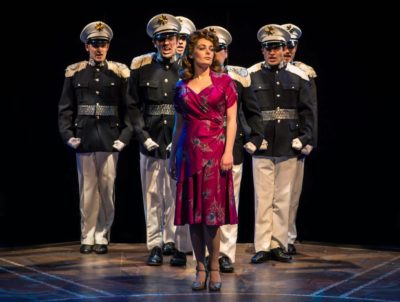
 What are you going to get in The Marriott Theatre’s latest revival of “Evita”?  Star Quality…and plenty of it in the form of actress and singer Hannah Corneau.  Remember that name because you will likely be hearing it a great deal to come if the opening night performance in Lincolnshire was any indication.  Ms. Corneau simply sets the in-the-round stage ablaze with a stunning portrayal of the late First Lady of Argentina, which wholly invigorates Andrew Lloyd Webber and Tim Rice’s often-revived rock opera.  Just in case you were thinking this 38-year-old chestnut has nothing left to do or say, let’s take a look at some of the ways Director and Choreographer Alex Sanchez has dusted off the cobwebs and reclaimed this gleaming musical tiara.
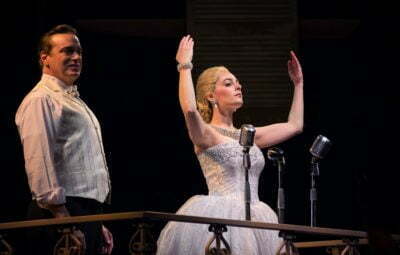
EVITA_LarryAdams-HannahCorneau

One need only look to the current national headlines to realize the political and social significance of a piece chronicling the rise and fall of a low-born illegitimate woman who championed the rights of the poor and middle-class to become not only the most powerful and controversial woman of her country but a legend long celebrated postmortem.  Eva Peron was and is beloved by many, hated and reviled by others and the center of endless fascination and intrigue.  Even her tragic death at 33 was shrouded in mystery as her embalmed corpse disappeared for 17 years, resurfacing only slightly tarnished.  Only the pedestal was completed for a monument that had been planned in her honor, but in 1978 she re-gained the legend she was always destined for, as the title character in an all-sung musical by a young up and coming British composer and lyricist that might also be thought of as “Eva Peron Superstar”.

Webber and Rice took a boldly acerbic approach to the Cinderella climb of “Santa Eva,” funneled through the eyes of a cynical narrator and commentator modeled on the Argentine-born revolutionary Che Guevara.  Even as it opens with the death and a haunting requiem mass for the leading lady, “Evita” goes on to show us a fiery and determined woman who clawed, charmed and screwed her way to the top of a national heap.  There can be little doubt that the road to corruption is often lined with good intentions, and it is debatable that the Peron’s rule may have done as much harm as good for their country. 
evita98

What is especially evident was the amount of old-fashioned Hollywood gloss only an actress could bring to a blatant Socialist agenda.  Tim Rice’s scathing lyrics allow us to ponder the magical effects of charisma and stage management that frequently shrouded good deeds among corruption and self-glorification.  Hollywood film director Alan Parker gave us a kinder and gentler version of this tale as a showcase for mega-star Madonna in 1996.  The Marriott has now returned the work to its more cynical roots (as well as the original vocal demands) while also showing Juan and Eva Peron as soul mates who complimented and elevated rather than eclipsed one another.
evita97

It is the star-wattage performance of Hannah Corneau in the title role, however, that elevates the Marriott’s third production of Evita to the level of “must see theatre”.  Just as the real Eva Peron seduced a nation, Corneau completely seduces and captivates her audience.  If her soaring soprano belting does not win you over by itself then her acting surely will.  Every nuance of this striking woman’s facial expressions and body language reveal the intriguing woman Eva most certainly was.  The fact that she was cut down in the prime of both life and career make “Evita” a tragic heroine regardless of her political contradictions.  But there is nothing tragic in Corneau’s uncompromising and thrilling performance. 

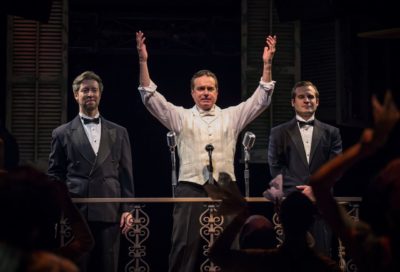
Fully matching Corneau is the magnificent, masculine and commanding Larry Adams as her equally conniving partner and political climber, Colonel and eventual President Juan Peron.  This is a role that often gets left in the shadows of the heroine, but Director Sanchez wisely avoids that trap.  He interpolates “You Must Love Me” from the film adaptation, which effectively underscores Eva’s final descent and realization that she and Juan shared a love story born of mutual accommodation.  Austin Lesch’s reedy tenor is not in their vocal league, but he does present a delightfully animated, hilarious and frequently intense contrast as the antagonist Che.
evita96

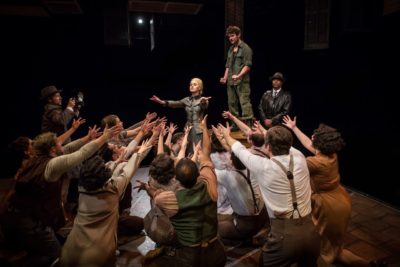
Artistry abounds as one can expect from a Marriott Theatre production.  Rather than offering a standard issue cookie cutter version of Director Hal Prince’s landmark original, Alex Sanchez’s fresh and intelligent choices bring Evita’s story to exciting life again on stage.  Gone is the movie theatre opening with its ensemble suddenly plunged into collective morbidity.  Instead, Sanchez shows us a single family surrounding a radio that carries the tragic announcement and its very personal effect on Eva Peron’s devoted “Descamisados” or “shirtless ones”.  The rise and political coup of Peronista gets an equally clever choreographed arm wrestling match played out by a succession of contenders that reminds us the truth that politics is the art of the possible. 
Read more

Bullets Over Broadway National Tour

Book by Woody Allen & Douglas McGrathBullets_200x200

Music & Lyrics by Various Composers

Directed by Jeff Whiting

Choreographed by Clare Cook from the work

of Susan Stroman

Produced by Broadway In Chicago

At the Private Bank Theatre, Chicago

Funny Roaring 20’s musical comedy energetic and fun

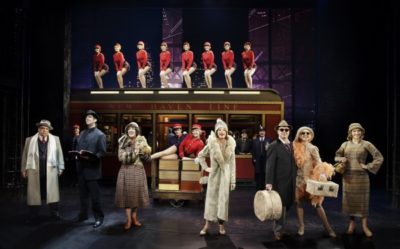
Bullets Over Broadway, based on the 1994 hit Woody Allen film, closed on August 24, 2014, after 156 performances and 33 previews. The non-Equity National Tour is a fun-filled old fashioned manic musical comedy. Why this musical failed on Broadway is a mystery to me. Maybe because it used trunk songs from various composers, or perhaps because it is structured like those 20′-30’s musicals? What ever the case on Broadway, the National Tour, in Chicago through May 1, 2016 at the old Shubert, now the Private Bank Theatre, is a whimsical, pleasing musical. It possesses terrific dancing, as only Susan Stroman can create, using the melodies of the Roaring 20’s. It is a major dance show!

bullets10

Bullets Over Broadway’s plot: In 1929, playwright David Shayne (the winning Michael Williams) is finally getting his first play, God of Our Fathers, produced on Broadway. The producer, Julian Marx (Rick Grossman), has enlisted the wealthy gangster Nick Valenti (Michael Corvino) to pay for the show. Valenti wants to have his dim-witted and untalented girlfriend, Olive Neal, (Jemma Jane) star as one of the leads. Valenti has assigned his strong-armed gangster, Cheech, (the fabulous Jeff Brooks) to watch over Olive. Surprisingly, Cheech comes up with great ideas for improving the play. However, aging diva Helen Sinclair (Emma Stratton, the real star of the show), romances the younger David, who already has a girlfriend, Ellen (Hannah Rose Deflumeri). Meanwhile, the leading man, Warner Purcell, (the hilarious Bradley Allan Zarr) has his eye on Olive. Mayhem ensues!

bullets11

Filled with familiar songs like Hoagy Carmichael’s “Up A Lazy River,” and “I’m Sitting on top of the World,” together with rousing tunes like Cole Porter’s “Let’s Misbehave,” Bullets Over Broadway plays as zany fun. Most of the tunes underscore the mood or tone of the comic action.

bullets12

The show’s cast of non-Equity players danced superbly and the main characters were first rate. Equity should do something about such terrific talent working for way under what their worth before all Equity tours disappear.

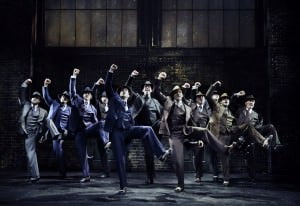
But for Chicago audiences, Bullets Over Broadway plays as a nicely paced, well danced show with funny lines (Woody Allen at his funniest) and spot-on dancers, particularly the dancing gangsters.

Read more

One-Man Star Wars Trilogy

Written and Performed by Charles Ross

Directed by TJ Dawe

Produced by Broadway in Chicago

“Well, from my point of view, The Friends of the Parks are evil!”—Darth Vader

With the release of The Force Awakens on DVD and the revelation of a new plan to build the Lucas Museum over a section of McCormick Place (assuming the Illinois General Assembly acts with alacrity and puts faith in Rahm), interest in the Star Wars has been revived to its highest peak in over ten years. So now is a good time for Charles Ross’s one-man adaptation of the original trilogy to return to Chicago, where it can be seen for the next few days at the Broadway Playhouse. Filled with onomatopoeia, hummed renditions of John Williams’s music, and direct quotations, but lacking any props or scenery, this highly energetic romp is great fun for die-hard fans, and amusing for casual Star Wars consumers.

Charles Ross

As soon as Charles Ross emerges onstage, he jumps into his manic recreation of A New Hope, beginning with an imperial officer announcing, “Lord Vader, exposition, exposition, exposition.” There’s nothing lazy about his performance, though, and Ross’s use of his hands to represent Princess Leia’s bagel-hair won over any members of the audience who hadn’t already bought into the show. (I won’t give away all his surprises, but a lot of the show’s humor comes from the childlike way Ross has of using his physicality to describe things). Episode IV proceeds at a break-neck pace, pausing only for Ross to express bemusement at the Rebels’ use of the metric system, because I guess that’s the strangest thing about the movie. His impression of Luke’s whining also got big laughs.

Once the first third of the show is over, Ross speaks to the audience directly, and feels out how to proceed. At opening night, there was one poor soul who admitted to having never seen a single Star Wars movie, and therefore, was quite confused, and destined to remain so. This person became the source of a great deal of fun, but Ross also seemed genuinely apologetic. Ross also takes the opportunity to relate some funny personal anecdotes about the impact the film series has had on his life. He’s been doing this show off-and-on for fifteen years now, and has used it as the inspiration for one-man versions of The Lord of the Rings and his upcoming adaptation of Pride and Prejudice. The audience itself was diverse and composed entirely of well-behaved, appreciative people, so potential buyers need not worry that this is some sort of fanboy ghetto.

You will pay for sitting in the front row.

Ross’s retellings of The Empire Strikes Back and Return of the Jedi are a lot more similar to the fan-work genre today known as “The Abridged Series.” He comments more about the absurdities of the story, and drops in a lot more humorous references to the prequels, but also makes a greater effort to capture the emotional heart of the trilogy. Ross also throws in references to the memes and other bits of fan activity that have emerged since he created this show, prior to the rise of the internet or Episodes II and III, but these moments seldom overwhelm the basic point of telling the story. Despite how heavily abbreviated the one-man trilogy is, Ross used nearly all of the Emperor’s dialogue without paraphrasing or truncating, (who could resist?) and the character’s scenes are the high point of the night as both a parody and a tribute. Also notable is that, while Ross’s rapid transformations sometimes come at the cost of his enunciation, Darth Vader’s heavy breathing is still distinct, and by the end of the show, he’s been working out for over an hour. If you go, and every Star Wars fan should at least once, be sure to stay for Ross’s story afterwards about the early development of the one man trilogy and how he reached an agreement with Lucasfilm, because it’s fascinating in its own right.

Read more

Jesus Hopped the “A” Train

By Stephen Adly Guirgis

Directed by Anish Jethmalani

Produced by Eclipse Theatre Company, Chicago

An Early Work by Guirgis a Sign of Big Things to Come

A new season for Eclipse Theatre means a new playwright to be spotlighted for a year, and Stephen Adly Guirgis is just the one to demonstrate theatre’s continuing relevance and vitality. From The Last Days of Judas Iscariot to The Motherfucker with the Hat, the New York-based Guirgis often wrestles with themes of responsibility, guilt, and justice in plays with a Christian framework and colorful language employed by a diverse array of urban characters. So, too, is the case with his early work, Jesus Hopped the “A” Train, which starts Eclipse’s season with an emotionally piercing production directed by Anish Jethmalani. Written in 2000, this play is set in the still-notorious Rikers Island jail, and examines the spiritual condition of two very different murderers, and how society reacts to them.

Read more

Even Longer & Farther Away

By Chelsea MarcantelNC_EvenLonger_400x4001

Directed by Thrisa Hodits

Produced by The New Colony

At The Den Theatre, Chicago

A Story We’ve All Heard Before

The New Colony has a very in-depth, methodological approach to creating their own collaborative works, one that begins with a short story and character sketches and, over a period of four to six months, evolves into a full-fledged production. This means that all of their work is new and, as the Co-Artistic Director Evan Linder says, written by and for The New Colony ensemble.

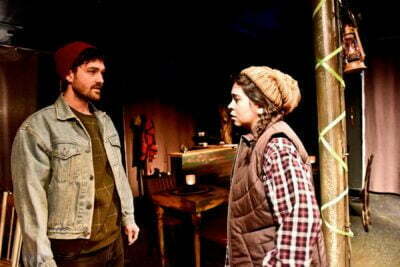
Though I’m not sure of the exact process whereby Chelsea Marcantel’s Even Longer & Farther Away came about, if it was through such a collaborative process it doesn’t seem to have helped. A quintessential coming-of-age story about a young man on a quest for closure following the death of his father, Even Longer & Farther Away is shockingly shallow and transparent in its uninspired use of clichés and tropes—long stale and molded—that try one’s patience and credulity in their bland representation of emotional truth.

EvenLonger-2

The story focuses on Elliot (Patriac Coakley), a youthful 30-year-old man who, at the dying request of his distant father, is hiking the Appalachian Trail to bury his father’s ashes at the top of Mount Katahdin, the one place he felt truly at home. Elliot never got to hike the trail with his father, so, for him, this journey is not only about closure but about finding connection with the father he never really felt he knew. Accompanying Elliot is Roy (Omer Abbas Salem), his boisterous best friend; and stalking behind them on the journey is Elliot’s estranged half-sister Alexis (Amanda Raquel Martinez) and her boyfriend Jack (Joe Lino) who pursue Elliot with one-half of their father’s ashen remains in the hope of forging some sibling relationship with him.

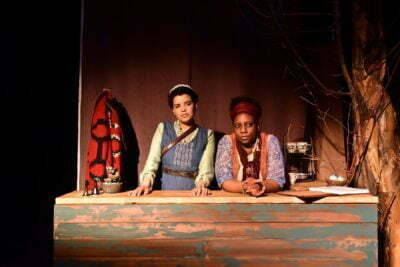
The play begins about 400 miles into the trek, when “the mountain” (non-ironic quotes) mysteriously leads them all to a “resort” (ironic quotes) whose proprietors are an old, mystical, story-weaving woman named Trudy (Deanna Reed-Foster) and her youthful-looking sister Nayda (Morgan McNaught). Elliot doesn’t care to rest or listen to Trudy’s stories (right there with ya’, brother!), but Roy and the others are tired and eventually convince him to stay the night. After all, tomorrow is the Spring Festival, which is the umpteenth year anniversary of when Nayda’s husband left her—plus, as Trudy tells Elliot, the mountain has brought him here for a reason.

EvenLonger-4

The mountain (and Trudy) indeed know better than Elliot what he needs, and, after about a half-dozen stories, the stubborn-minded Elliot finally discovers the truth about his father and comes to forgive him and reconcile with Alexis—and the equally-stubborn Nayda, too, finally finds peace for her pining heart.

Everything neat and tidy, tied in a bow, and laid at our feet as enlightenment—no tangled conflicts, no residual resentments—just pure accord and a Spring Festival. Just like life.

Understanding that, as with them all, much time went into this production, one is discouraged to find so much to be disappointed in. Most of the responsibility here falls on Mercantel’s script: it is shallow, transparent, and singularly contrived. Not only does “the mountain” (and, by extension, Trudy) design against Elliot’s intended quest by magically confining him to the “resort” even after he tries to hike away, but Marcantel herself shows her author’s hand in how she manipulates the path of Elliot’s fate by spiriting away every interpersonal conflict that arises with either comedic diffusion or swift, mutual understanding. Herein, too, lies both the script’s shallowness and transparency: with their conflicts stamped out, Marcantel’s characters quickly become flat and uninteresting; and once I saw through their shallow souls, I saw plainly the easy inevitability of Elliot’s happy resolution. All the mystery and suspense of “How will he do ‘it’?” was melted into a weary anticipation of when he surely would and when I could finally leave.

EvenLonger-5

The acting didn’t help much, either. With the exception of Omar Abbas Salem, who embraces his comedic supporting role with enthusiastic gusto, the other, more principal roles feel barely lived-in. I felt no history between Alexis and Elliot or even the older pair of siblings, Nayda and Trudy, who argue with each other more like polite strangers than sisters who have lived in close quarters for many years. Some of this is surely due to the limitations of the writing, but when I looked into the eyes of the young lovers, Alexis and Jack, all I saw were the blank stares of actors. Way on the opposite end of the spectrum, however, Deanna Reed-Foster, indulges in her character’s trope too heartily, and what begins as a hokey exaggeration of a mystical mountain woman, in the end crosses over into a caricatural farce.

Even Longer & Father Away is a fantastical quest of tropes in search of a cliché: the angry, young man gone native—accompanied by his comedic confidant, his young-but-mature sister, and her happy-go-lucky boyfriend—quests stubbornly for what he thinks he needs, but instead encounters a wise, mystical woman on a mountaintop whose perfectly felicitous stories lead him exactly to what he always really needed. We’ve all seen this story in one form or another, so why tell it again? With exactly zero unique twists or insights to offer, this play is unentertaining and eminently forgettable.

Read more

Dreamgirls by Porchlight Music Theatre

Book and Lyrics by Tom EyenDreamgirls Banner

Music by Henry Krieger

Directed & Choreographed by Brenda Dider

Musical  Direction & Orchestrations by Doug Peck

Produced by Porchlight Music Theatre

At Stage 773 Chicago

Fast-paced, well sung and emotional look into the world of R & B

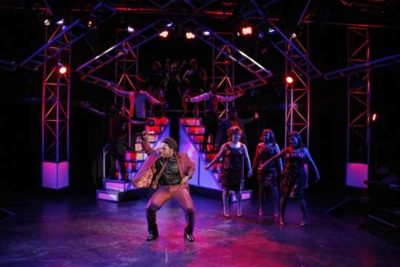
Dreamgirls–owes much to  original director-choreographer Michael Bennett’s breathtaking cinematic-style staging that keeps the action flowing most effectively.  The cast depicts the rise of R and B  through the disco era, circa 1962-75.  This emotional production unfolds as an R and B pop operetta as much of the story (and dialogue) is told in song and recitative.

dr12

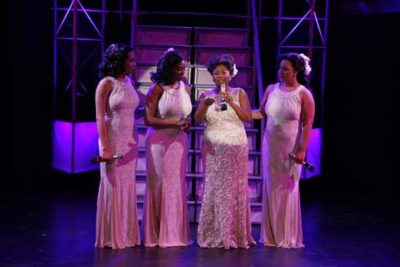
The story chronicles up-and-coming 1960’s singing girl group as they experience the triumphs and tribulations found in fame and fortune. Deena Jones (Candace C. Edwards), Lorrell Robinson (Katherine Thomas) and Effie White (Donica Lynn) are The Dreamettes, a fledgling group that the ambitious agent Curtis Taylor (Evan Tyrone Martin) discovers and molds from backup singers for James “Thunder” Early (Eric Lewis channeling James Brown) to a featured group.

From the start, Dreamgirls features an assortment of Henry Krieger music and Tom Eyen’s toe-tapping tunes, rich anthems, and soulful power ballads. Act One is a fabulous rhythmic trip through R and B, Blues and Soul  with original songs written in the style of the famous MoTown tunes.  The show stopper “Fake Your Way to the Top” and “Steppin’ to the Bad Side” (my favorite in the show) is an amazingly stylistic number rich in innovative choreography.

dr11

As in the entire show, the dances and the choreography by Brenda Didier uses the Michael Bennett format to land terrific movement. “I Want You Baby” Eric Lewis’s powerful song is spectacular !

But the first act’s core emotional moment occurs when petite Donica Lynn, as Effie White, delivers the heart wrenching power ballad “And I Am Telling You I’m Not Going” with deep honesty worthy of Jennifer Holiday or Jennifer Hudson’s Oscar winning rendition. Lynn received a well deserved strong ovation as she sold the song quite convincingly.

At 2 hours and 40 minutes, Dreamgirls is  an ambitious journey. The tone is melancholy and the songs become more bluesy in act tow. Donica Lynn delivers another winning song-“I Am Changing” as Effie makes a comeback as a sole artist after Curtis eliminates her from the girl group. Eric Lewis as “Thunder” Early is terrific.

dr14

Dreamgirls is a manic, polished and classy music and dance romp through Motown. You’ll quickly get excited by the sheer energy and deep emotional truth in this modern operetta. Powerful and richly evocative voices nail the tunes as the nuances of the struggles to attain and survive fame and fortune in the music world is sensitively presented. The joyous and angst ridden world of R and B music makes for a most engaging theatrical experience.Donica Lynn and Evan Tyrone Martin anchor an outstanding cast.  Brenda Didier’s direction works well and Doug Peck’s orchestra  sounds terrific.  Take a trip into the world of R and B-it’ll send you soaring. Porchlight’s production is steeped in raw emotion expressed through song.

Read more

Don’t Make Me Over (In Tribute to Dionne Warwick)

By Jackie Taylorwarwicklogo

Directed by Reuben Echoles

Produced by Black Ensemble Theater, Chicago

To An Idol, For Her Fans

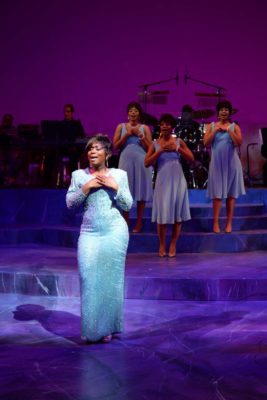
In honor of its 40th anniversary, Black Ensemble Theater is producing seven of its most popular and critically-acclaimed productions from its history—all of them written by the founder and executive director of the Black Ensemble, Jackie Taylor. The third in the series, Don’t Make Me Over (In Tribute to Dionne Warwick), is just what it advertises itself to be: a full-fledged, live-band, feel-good tribute to the soulful pop singer Dionne Warwick and her extensive career. With two hours of popular classics, dancing, good-natured humor, and historical anecdotes and factoids, lifelong fans of Warwick will find much to love about this musical spectacle. The rest of us will enjoy the music.

warwick11

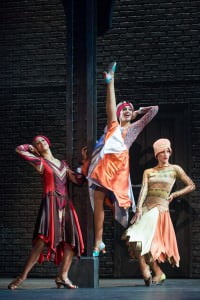
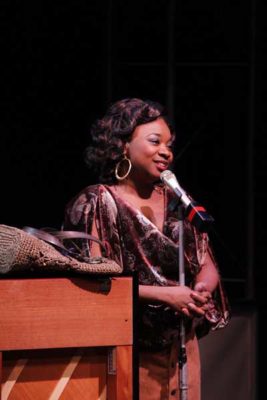
Don’t Make Me Over is essentially a playlist of some of the best and most memorable Dionne Warwick songs performed by professional singers and a live, 8-piece band. Additionally, the dozen-plus hits are interspersed with short vignettes from Warwick’s life that are introduced and commented upon by the “mistress of ceremonies” Ms. Divine (Alexis J. Rogers) who guides us with a boisterous charisma down Warwick memory lane, often adding a endearing zest to the proceedings with her sharp sense of humor and interesting anecdotes. Accompanying Ms. Divine are “three Dionne’s” adorned in splendid dresses who each lend their voices to some of Warwick’s songs. The production thus weaves together music and historical sketches—we see, among other moments, Warwick in her early years as a background singer with her family, her discovery by Burt Bacharach (William Dale Rowland), and her return to eminence in the 1980s. The production then concludes—as all musical tributes ought—with a swelling ensemble performance of one of Warwick’s most recognizable collaborations.

Read more

Othello: The Remix (Shakespeare 400 Chicago)

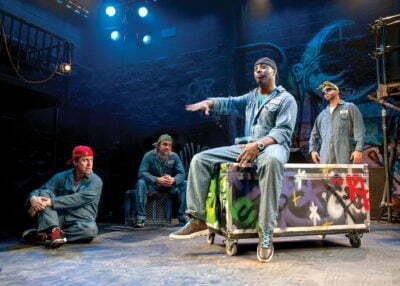
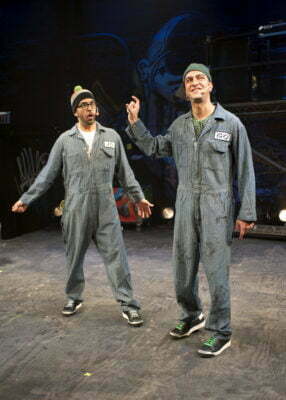
Jackson Doran, GQ, Postell Pringle, and JQ. Photos by Michael Brosilow.

Othello: The Remix

Written, Directed, and Composed by GQ and JQ

Developed with Rick Boynton

Produced by Chicago Shakespeare Theatre

A Streamlined, Modern Othello

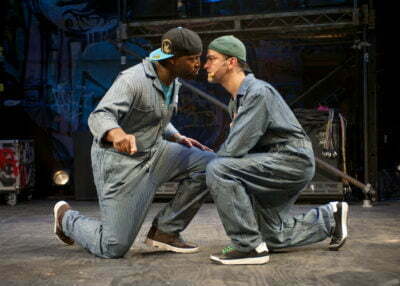
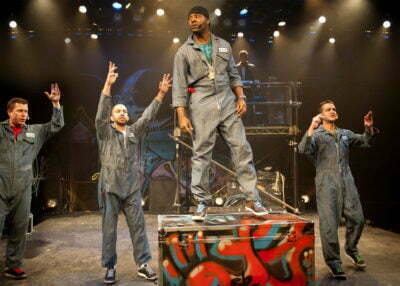
When Jonathan Munby’s Othello played at Navy Pier earlier this year, as the first Chicago Shakespeare original production in the Shakespeare 400 Festival, widespread opinion was that it was a masterful telling of a story which is overly long for its simple plot. If you love this play’s characters, but have a problem with its pacing, the Q Brothers’ adaptation is just the thing for you. Having premiered in 2012 and played at Chicago Shakespeare the following year, this eighty minute streamlined version of is set in the modern music industry, and told through rap (as was a section of The Complete Works of William Shakespeare (Abridged) by the Reduced Shakespeare Company, but this explores the idea in much more depth, while retaining the antic comedy). While Shakespeare fans may miss the Bard’s verbal acuity, the Q Brothers are no slouches as poets, and the four-man ensemble delivers these newer rhymes with a craft which, in its own way, requires as much practice as classical Shakespeare.

Roderigo (JQ) and Iago (GQ)

As his opener, Othello (Postell Pringle) declares how he rose from nothing to become one of the foremost rappers in the world. This is crucial—the boasting which caused rich, white Desdemona to become infatuated with him is all truthful, unlike in the original, and Othello believes that, in her, he has achieved the American Dream. (Othello is also much nearer Desdemona in age.) Desdemona herself is never seen onstage, but her wordless singing backs up Othello’s songs. She’s regarded by his fans as a positive addition to his artistic output, and adored by all. However, Othello’s newest find, Cassio (Jackson Doran), is a much bigger problem for one of the label’s lesser names, Iago (GQ). Besides how insulting it is do have to open for someone who is his junior in every regard, Iago cannot stand performing in Cassio’s boyband-style dance routines, and absolutely despises where his juvenile, cloying lyrics are leading hip-hop.

Othello (Postell Pringle) and Iago (GQ)

Othello will hear nothing against Cassio, of course, so Iago implements his wicked scheme. Tricked into supplying him with money is the techie Roderigo (JQ), a lugubrious nerd whose knowledge of gaming culture is too detailed for the authors not to be nerds, themselves. JQ plays several minor characters, and in a few scenes, has to rapidly switch between them, which he also did in the Q Brothers’ Christmas Carol. His extreme changes are all uproarious, and his Bianca and Ludovico, like his Rodrigo, have new gimmicks to keep them interesting. Jackson Doran is suitably annoying as Cassio, who merely pretends to be a player; it’s a little hard not to empathize with Iago sometimes. But Dornan also plays Iago’s wife Emilia, who, though often another source of comic relief in her desperation for Iago’s attention, also has a fierce drag queen sort of moral voice, which she uses to delightful effect.

The core of every Othello is Iago, and JQ’s is as mean as they come. Only in the tough-guy world of hip-hop could this scowling, pouting figure pass himself off as honest and well-intentioned, but so he does. Of all the dope raps in the show, JQ performs the two most memorable, in which he proclaims his reasons for hating Othello, and later, himself to be a mastermind. Clayton Stamper’s DJing is in precise coordination with the emotional arc of the story, but there’s something especially menacing about the moments in which he backs up Iago. Postell Pringle’s Othello, who as I note above, is much more noble and likeable than the original, is likewise charismatic. It seems like Iago has a challenge in bringing him down, which provides the story with much-needed tension. The non-opening night I attended, Chicago Shakespeare had achieved the rare feat of attracting a truly diverse audience. Even better, it satisfied them. Othello need not be interpreted as a morality tale, but having done so, the Q Brothers made it their own, and told it with enviable skill.

Read more

The Book Club Play

The Book Club Play
By Karen Zacarías

Directed by Kevin Christopher Fox

Produced by 16th Street Theater, Berwyn

In Which Running the Perfect Book Club is Serious Business

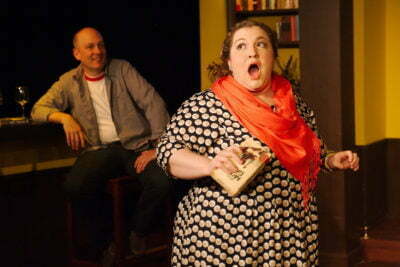
Karen Zacarías is everywhere. The D.C. based playwright had five world premieres this season, and her play Destiny of Desire will be performed at the Goodman next year. In the meantime, audiences at Berwyn’s 16th Street Theatre have the chance to see the Chicago premiere of her uproarious social comedy, The Book Club Play, in which all the absurdities of self-conscious book-lovers (and those who pose as book-lovers) are satirized, the redeeming power of art is explored, and goofball caricatures develop hearts. The concept has obvious appeal for the theatre-going audience, which tends to be the kind of people who join book-clubs, and Kevin Fox’s smart, hilarious production was extended due to high ticket sales before it even opened.

Ana (Ann Filmer), Rob (Brad Harbaugh), and Will (Gary Alexander). Photos by Anthony Aicardi.

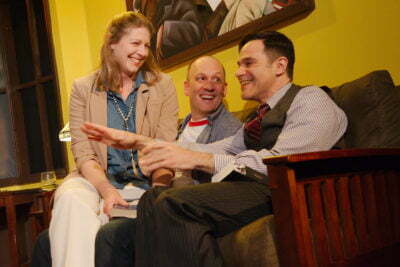
Ana (Ann Filmer), the book club leader, introduces herself through direct-address as a person who feels greatly responsible for improving the lives of others. She does so with firm, condescending guidance, and nobody has benefitted from her micro-managing more than her dumber and less literate husband, Rob (Brad Harbaugh). The reason for her direct address is that she has volunteered for her book club meetings to be recorded by Danish documentarian Lars Knutsen, whose name carries great prestige. Hopefully, her book club (which she points out predates Oprah’s) will lead to more people throughout the nation resolving to become better versions of themselves, meaning, more like her.

Lily (Jennifer Glasse), Jen (Hannah Gomez), and Will (Gary Alexander)

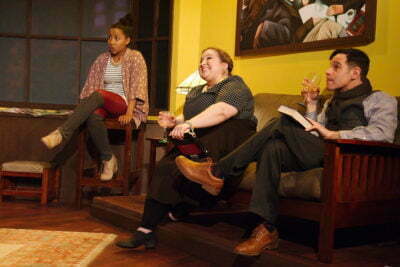
At the first meeting we see, the members are discussing Moby Dick, which was chosen by Ana and Rob’s best friend, Will (Gary Alexander). Matching Ana in snootiness, Will is believed by her and Rob to be the tragic third wheel in their love-triangle, the object of his affections being Ana, of course. New member Lily (Jennifer Glasse), who is Ana’s subordinate at their newspaper, inadvertently offends Will by picking up on his obvious homosexuality. But since she’s the only black member, the others often say awkward things to her, too. The fifth member of the group is Jen (Hannah Gomez), a paralegal with a scandalous past, and the poorest member of the club. But unlike Rob, she actually does read the books, and her enlightenment was Will’s project, not Ana’s. Perhaps it’s the influence of the camera, but the meeting is much tenser and less formal than Ana hoped.

Rob (Bob Harbaugh) and Jen (Hannah Gomez)

The next meeting, for which Jen choose Edith Wharton’s The Age of Innocence, goes even worse. Rob actually read this book, and is deeply disturbed by how much of his marriage he recognizes in it. As romantic tensions, occupational resentments, and plain old dislike flares among the members, Ana realizes that their chosen authors are noticeably lacking in diversity, and asks Lily to pick something for next time that will shake things up. Lily picks Twilight. For that meeting, Jen challenges Ana and Will’s power by inviting a new person, the literary professor Alex (Jesse Dornan), who sees value in keeping abreast of pop culture since his fiancé dumped him for not being Edward Cullen. This does not go over well with the leaders of the club, but Alex is not so easily cowed by them, or by Lars Knutsen’s all-seeing camera.

Alex (Jesse Dornan)

This is, obviously, a piece which requires an excellent ensemble of actors. The Book Club Play has gone through many revisions since its first professional staging in 2008, and certain names are always changed to fit the location of each performance (in this version, Ana and Lily work for The Daily Herald). A potential pitfall is that the characters may come off too broad, but in this production, director Kevin Fox guides them along a journey on which they develop more depth as they explore literature from different angles, or at least, we come to know them better. For example, Brad Harbaugh’s Rob and Hannah Gomez’s Jen start as cheerful, but hapless, schlubs, with Jen a little more anxious, and Rob less aware of his unhappiness. Jennifer Glasse’s Lily is smarter, but uncomfortable with the elitism she feels pressured to adopt because of that—she does not want to become another Ana. As the most realistic characters, they inspire the most sympathy and provide people who are less the critical theory-type with somebody to root for, while still displaying plenty of easily recognizable foibles.

Rob (Brad Harbaugh), Lily (Jennifer Glasse), and Will (Gary Alexander)

The half of the club with a greater affinity for intellectual discussion all have type-A personalities, which allows for both more aggressive comedy and impassioned discussion of the merits of different types of literature. Jesse Dornan’s Alex is a strange, somewhat unsettling presence, and we clearly feel the group dynamic shift with his entrance. Gary Alexander’s Will and Ann Filmer’s Ana are the targets of most of the play’s satire, and at times seem almost too smug to be believed, but the actors are so funny, each of their moments are treasures. Most of the actors also play a minor character who delivers a brief monologue to cover for the rest of the cast’s costume changes between scenes, and these moments, too, combine humor with occasional unexpected insight into the impact a book can have on a reader. Besides the inter-personal drama, the question at the core of the play is whether pop-culture should be regarded as a guilty pleasure at best, or whether it can be embraced whole-heartedly by people whose tastes also include the classics. The Book Club Play itself is a people-pleasing comedy which never gets too heavy or challenging. However, it is done so well, that, like one of the books under discussion, it may be the right thing at the right time to be a greatly rewarding experience.

Read more

Paper City Phoenix

By Walt McGoughPCP_Blog-654x234

Directed by Rebecca Willingham

Produced by Tympanic Theatre Company

At Profiles’ The Ally Stage, Chicago

Sci-fi dark comedy more confusing that dark comedy

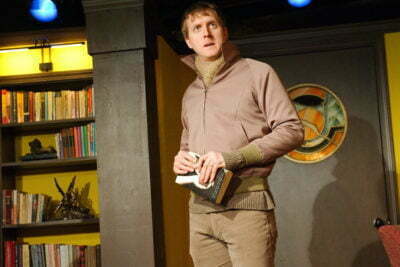
Doing sci-fi dark comedies on stage is a daunting task, and Tympanic Theatre Company tried to make Paper City Phoenix work, but they were overwhelmed by the confusing script. There are too many strange and improbable plot twists, which included the main character climbing to the top of a cell tower to kill herself but being “saved” by being hit by lighting and becoming infused with infinite Internet trivia knowledge. There is a women obsessed by grief for her missing brother so she actually is printing all  the content of the Internet. (That is like counting all the pebbles on a sand beach!) There is an anti-technology cult which dress in brown robes and live together like cloistered monks and two hyper city agents who spy on folks for unclear reasons. City residents get blown up by the Internet girl, yet one of the investigators becomes a sort-of robot internet zombie. I could go on with the elements that make absurdist work seem natural but I think you get the point.

With the players screaming and foul-mouthed dialogue, plus many black-outs for set changes and weird visuals and strobe lighting, the confusing plot just rambles on toward a sort of redemptive ending that finds the Internet girl being transformed back to a human after sacrificing her soul mate to save the world. Of course, by that time I had become anxious for this convoluted work to end after it self-destructed early on. The acting was amateurish and the production values were ahead of the script and the character development. With so many stage worthy plays available, I wonder why Tympanic Theatre would mount such a dud?

Read more