
Theatre has always had its share of rituals, warnings and backstage folklore. Actors may avoid wishing one another good luck, refuse to say Macbeth inside a theatre and insist that a ghost light remain burning on an empty stage. Some traditions have practical roots, while others have been passed down so long that their true origins are difficult to separate from legend.
Here are some of the best-known theatre superstitions, what performers traditionally believe about them and the explanations behind the lore.
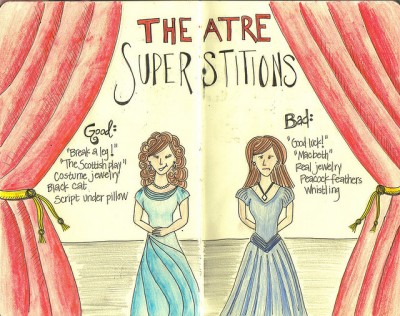
Why Do Actors Say “Break a Leg”?
One of theatre’s most familiar traditions is to say “break a leg” instead of “good luck” before a performance. The exact origin of the expression is uncertain, and many explanations have accumulated over the years.
One theory treats the phrase as a form of reverse psychology: wishing an actor something bad supposedly prevents bad luck from interfering with the performance. Other stories connect the phrase to bowing after repeated curtain calls or to the “legs,” the curtains at the sides of a stage. In that version, “breaking” the line of the legs meant making it onto the stage to perform.
Stories linking the expression to John Wilkes Booth breaking his leg after assassinating Abraham Lincoln at Ford’s Theatre are also part of the folklore, but they should not be treated as the established origin of the phrase. With theatre traditions, a memorable story often survives even when its historical evidence is uncertain.
Why Is Macbeth Called “The Scottish Play”?
Perhaps the most famous theatrical superstition is the belief that saying Macbeth inside a theatre brings bad luck. Performers commonly substitute “The Scottish Play.” The superstition itself is real theatre tradition, but many of the dramatic stories offered to explain its origin are legends rather than established history.
The play’s witches and supernatural themes have long contributed to its ominous reputation. The Royal Shakespeare Company notes that folklore surrounding Macbeth includes tales of accidents, injuries and deaths associated with productions. The RSC also points to more practical explanations: the play contains stage combat, is often performed in dark settings and historically could be mounted by a theatre company hoping a popular Shakespeare title would rescue weak ticket sales.
The infamous 1849 Astor Place Riot in New York is sometimes included in accounts of the curse. Rival actors Edwin Forrest and William Charles Macready were appearing in competing productions of Macbeth, and the conflict surrounding their rivalry culminated in a deadly riot. That event happened, but its connection to a supernatural curse is, of course, theatre lore.
According to tradition, an actor who accidentally says the forbidden name can “undo” the bad luck by leaving the theatre, turning around three times, spitting or cursing and knocking to be allowed back inside. The exact ritual varies depending on whom you ask.
The Ghost Light
A ghost light is a single light left burning onstage when a theatre is otherwise dark. Folklore says it keeps theatrical ghosts happy—or keeps them away, depending on the version of the story.
There is also a straightforward practical reason for it. A dark stage can contain scenery, cables, equipment, trapdoors, steps and an orchestra pit. Leaving a light on helps the first person entering the theatre see where they are going. The practical safety measure and the ghost story have become intertwined over generations of theatre tradition.
Never Whistle Backstage
Whistling backstage has traditionally been considered bad luck. A popular explanation connects the rule to sailors who found work as stagehands because their experience with ropes and rigging transferred naturally to theatrical fly systems.
According to the story, crews once communicated using coded whistles. An actor casually whistling backstage could therefore be mistaken for someone giving a cue, potentially causing scenery or equipment to move at the wrong time. Modern theatres use headsets, intercoms and cue systems, but the no-whistling tradition remains.
Never Say the Last Line Before Opening Night
Another longstanding superstition says actors should not speak the final line of a play during rehearsal. Traditionally, the last line is saved until the production is performed before an audience. Like many theatrical customs, the practice turns the opening performance into a symbolic moment when the production finally becomes complete.
A Bad Dress Rehearsal Means a Good Opening Night
When a dress rehearsal goes badly, someone will almost inevitably predict a great opening night. This may be less mystical than motivational. A rough final rehearsal can sharpen everyone’s concentration and expose problems while there is still time to correct them. The Royal Shakespeare Company includes the bad-dress-rehearsal tradition among theatre’s enduring superstitions.
Unlucky Colors, Peacock Feathers and Mirrors
Theatre folklore contains a long list of objects and colors said to invite trouble. Green and blue have both been considered unlucky in different traditions. Peacock feathers are another famous taboo, sometimes associated with the “evil eye” pattern in the feather. Mirrors have also acquired an unlucky reputation, although their ability to reflect stage lighting and reveal unintended parts of a set gives directors a practical reason to use them carefully.
Other traditions warn against using real money or valuable jewelry onstage. These rules may have a less mysterious explanation: expensive or easily stolen items are unnecessary risks in a busy theatre.
More Theatre Superstitions and Traditions
The exact rules vary from theatre to theatre and company to company. Among the many traditions performers have repeated over the years are avoiding real flowers onstage, entering or leaving a dressing room with a particular foot first, never knitting in the wings, avoiding a Friday opening and waiting until after a performance to give actors flowers.
Not every actor follows these customs, and not every origin story can be verified. That is part of what makes theatre superstition interesting. Live performance combines risk, repetition, ritual and a strong sense of community, creating ideal conditions for traditions to survive long after the circumstances that may have inspired them have disappeared.
Are Theatre Superstitions Really True?
There is no evidence that saying Macbeth, wearing a particular color or wishing an actor good luck can supernaturally determine how a performance will go. But the traditions themselves are genuine parts of theatre culture. Some grew from practical safety concerns, some reflect older beliefs about luck and the supernatural, and others have origins that remain disputed.
For performers, following the ritual can be part of belonging to the theatre community. Whether you believe in the curse or not, you may still want to think twice before walking backstage and shouting “Macbeth!” on opening night.