MUST SEE

These are Chicago Critics Must See shows. If you are only going to see one show let us recommend one of these great pieces of true Art!

MUST SEEREVIEWSTheatre Reviews

Othello (Shakespeare 400 Chicago)

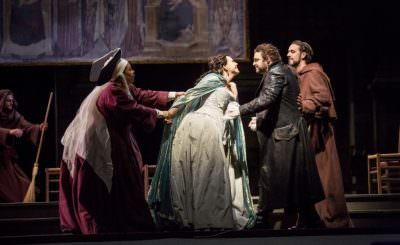
Though his cast’s interpretation of Othello, Iago, and the rest is not definitive, their choices during the two climactic scenes of violence provide immensely satisfying insight into each of these ambiguous, multi-faceted characters. Shakespeare was a fully mature dramatist and poet when he wrote Othello, and the cast delivers some of his best language rivetingly. Those who are new to the play will have an ideal introduction to it at Chicago Shakespeare, and those who know it will find it still holds surprises.

Read More
MUST SEEREVIEWSTheatre Reviews

2666

One of the most anticipated, bizarre, and audacious works in the American theatrical landscape finally makes its debut at the Goodman after years of development. 2666, adapted from the posthumously published novel by Roberto Bolaño, is a five-and-a-half-hour long epic narrative which, like the Chilean author’s novel, radically changes styles with each act. Goodman artistic director Bob Falls took on this project with the sort of expansive vision which can only be driven by limitless ambition and admiration for his source, and yet, even he brought in a co-writer and director, the first time working at the Goodman that Falls had done so. Even with the administration’s support, 2666 required a million-dollar grant from an actor-turned-monk-turned-Powerball winner to finally be produced. The result is a work of such complexity and scope that it is daunting to even describe. But it is one the theatre scene is ready for.

Read More
MUST SEEREVIEWSTheatre Reviews

Sancho: An Act of Remembrance (Shakespeare 400 Chicago)

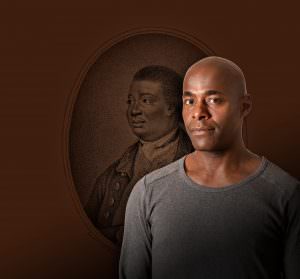
It’s remarkable how Joseph nearly plays two characters: the younger, brasher, and older, wiser Sancho, and how he is equally convincing and magnetic as each. The real Charles Ignatius Sancho was hobbled in his acting career by a speech impediment which Joseph chose to interpret as a lisp; but in Joseph’s mouth, it’s an extraordinary tool for conveying subtlety as well as emphasis, wit as well as poignancy. In a time when Europe is agonizing over multiculturalism, Joseph wrote this play in part to demonstrate that London has already been a multicultural society for hundreds of years. For Americans, the story is a reminder of the importance of the right to vote, and the dignity intrinsic in exercising it.

Read More